Showing posts with label Kindergarten. Show all posts

Wednesday, June 27, 2012

Creative Play in a Montessori Environment

Experts acknowledge that the loss of creative play has negative consequences. Imagination and creativity; cornerstones of higher math and science are developed through creative play. David Elkind, author of The Power of Play, writes "Creativity and imagination are like muscles; if you don't use them, you lose them,"

Aldie Kindergarten student's collaborative extension.
It is a common misconception that the Montessori method of learning limits creative play. This is far from actuality. In the Montessori learning environment children are often presented with materials that lay the foundation to traditional areas of education, such as the basic understanding of area and volume learned by working with the brown stair materials. However, once a child begins to grasp the geometry of these objects, an extension of this exercise allows for children to explore the possibilities of construction limited only by their imagination but grounded in a far better understanding of plane geometry. Perhaps a simpler explanation would be a comparison of two approaches to music education. Would you consider it the best method for a person to develop musical skills or to understand musical composition by simply providing a person with a set of bells without guidance or would an introduction to the chromatic scale to develop a sense of tone before doing so lead to a better learning experience and honestly, more fun? When children have a basic understanding of skills or concepts it allows for a heightened learning experience and improves a child’s confidence while playing.
Herndon students using loose parts for outdoor building.
Children have a natural and intrinsic desire to play, explore, adapt and cooperate, especially in the outdoors. The benefits of outdoor play are easily identified and the development of large-motor skills and social interactions are well documented. Although traditional playground equipment such as slides, climbers, balls, etc. provide children a great deal of benefit and avenues for development, true creative activity is somewhat limited. Providing children with materials and equipment (loose parts) that can stimulate, facilitate and enhance children’s play leads to a high level of ownership which is a powerful ingredient in providing a positive play and learning experience for a child. Jeff Hill of the Childrens Scrapstore, a UK business providing children with these loose parts for playground use since 1982 states, “Giving children the opportunity to experience higher levels of creative activity during playtime, makes a difference to them, to their relationships with others and ultimately to the whole school environment.”

Westfields children on board the train climber.
At The Boyd School, we have enhanced our children’s outdoor experience through a number of playground extensions. Through the use of loose parts, children have the opportunity to construct on a larger scale than within the walls of the classroom using similar materials. Currently, children can build with custom designed, lightweight outdoor building blocks and small tires. The buildings, towers, and vehicles are only limited by their imagination. Additional and various loose parts are introduced to constantly provide children new materials in which to play. Children at the Aldie Campus have the opportunity to manipulate their playground experience through the use of a Snug Play system. The Snug Play system, generously donated by Van Metre to the school, is a series of lightweight, open-ended and moveable collection of play equipment. Children have the opportunity to create entirely new play environments and experiences through collaboration and the use of their imaginations. The Snug Play system at The Boyd School is one of the first installations in Virginia. Children at the Broadlands Campus have the opportunity to manipulate and build with natural materials creating paths, walls, and tunnels. The Boyd School - Westfields Campus offers children the opportunity to ‘travel’ as far as their imaginations allow on board an Amish built train climber.

Tuesday, April 24, 2012

Tracing Our Roots to Germany

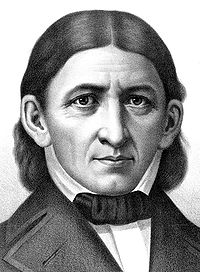
Friedrich Fröbel
As I was working on the school’s Facebook Timeline, I quickly came to realize that the creation of The Boyd School began long before the actual founding of The Boyd School in 1994. As a fully accredited Montessori school, one would think perhaps the natural start of our timeline would begin in 1907 with the opening of Dr. Maria Montessori’s first Casa dei Bambini (Children's House) in Rome, Italy or maybe with her birth in 1870. But rather, I trace our roots back to Friedrich Fröbel in 1837. This was the year that Fröbel created a play and activity institute as a social experience for children for their transition from home to school. His goal was that children should be taken care of and nourished in "children's gardens" like plants in a garden. Fröbel’s Kindergarten was the birth of early childhood education.

Kindergarten long was considered a child’s introduction to formal learning and consisted of periods of play and social development. However, a dramatic increased emphasis on early academics has risen in the past few decades and 5 year old children do indeed have learning expectations far exceeding those of yesteryear. Research indicates that children learn more in the earliest stages of their life than at any other time and the movement to better capture a child’s massive brain growth does have warrant. But careful consideration needs to be given to how children learn and what is developmentally appropriate. You’ll be hard-pressed to find an early childhood expert or a Kindergarten teacher that would advocate for a classroom of 5 year olds sitting at desks working on worksheet after worksheet. In fact Dr. John Medina, director of the Brain Center for Applied Learning Research at Seattle Pacific University has said, "If you wanted to create an education environment that was directly opposed to what the brain was good at doing, you would probably design something like a classroom."

There are a great many benefits of a Montessori learning environment for young children and the beginning of their formal education. The individualized curriculum of a Montessori environment where children truly learn and discover at their own pace allows for children across the entire developmental spectrum to maximize their personal achievement. It is fundamentally understood and research affirmed, ‘learning-by-doing’ lays the foundation for higher learning. Dr. Adele Diamond, Canada Research Chair in Developmental Cognitive Neuroscience at the University of British Columbia found and published, “motor development and cognitive development may be much more interrelated than has been previously appreciated. Indeed, they may be fundamentally intertwined.” The learning materials in a Montessori classroom allow for children to touch, explore, and discover. This tactile learning allows for children to experience their environment which is the essence of the natural process of education. The multi-age classroom environment enhances a child’s self-confidence and self-esteem -- two qualities paramount to attempting new things later in life. Our students are encouraged to work at an individual pace and work with others who are at a similar level of academic development regardless of age. Additionally, older children are encouraged to share their knowledge with their classmates and serve as mentors or role models for the younger members of their class. Our Kindergarten students also have an extended work period in a small group environment often with a student to teacher ratio around 6:1.  This intimate learning environment allows students to experience learning and encourages thinking. Our Kindergarten work period teems with creative and collaborative learning, fostering problem-solving techniques and building a foundation to achieve.

While working on this entry, I came across a great line by Dr. Amanda Moreno in the Huffington Post - "Somehow I don't think Robert Fulghum's list of essential lessons learned in kindergarten would have the same ring to it if among "share everything" and "play fair" appeared "100 sight words," "command of capitalization and punctuation," and "compose and decompose numbers 11-19." The idea that children 5 years of age are required to meet certain academic benchmarks is a bit misguided, however children this age (and younger) when properly guided can accomplish amazing results. Montessori education is a preparation for life, not a search for intellectual skills. The children have one intuitive aim in their self-development; they want to develop their inner resources and ability to cope with a strange and complex world. The child who accomplishes this, moves into harmony with this world and becomes a whole person. Montessori as an educational approach is not designed simply to teach children basic skills and information. Children need to learn to trust their own ability to think and solve problems independently. Montessori encourages students to do their own research, analyze what they found, and come to their own conclusions. The goal is to lead students to think for themselves and become actively engaged in the learning process.