Thursday, February 21, 2013
What is Boyd Montessori?

Thursday, June 21, 2012
The Amazing Teacher
It takes an uniquely talented individual to be a teacher. They truly are the life-force of any institute of learning. We all are aware that these amazing people are tasked with educating the future, the proverbial next generation. We also understand they are responsible for developing in children social skills necessary for each child to become productive members of society.
Maria Montessori said of teachers, “The greatest sign of success for a teacher... is to be able to say, ‘The children are now working as if I did not exist.’” Her statement requires some additional thought to fully comprehend the inherent meanings.
It is the teacher’s responsibility to create an environment in which each of her students feel comfortable and at ease. To create an environment conducive to discovering, to exploring, to learning. Each child needs to be guided towards independence and instilled with the confidence to learn on their own. Meaning, children have to be both willing to succeed and conversely willing to undergo failure and to use a set-back as a learning tool. Keen observation and interaction is required by teachers to understand the needs of each child in order for this concept to come to fruition.
In a classroom inspired by the research and educational philosophy of Montessori, children stay with the same teacher for three years. This developmental journey results in a tremendous bond between child and teacher not to mention teacher and family. Recently, we had the opportunity to enjoy the wide arrange of emotions as children cross or move up to the next level in our Montessori learning environments. From the shear joy and pride teachers feel as a child completes this stage of development to the heartfelt tears as they say goodbye, these incredible people we call teachers truly understand Montessori’s statement.
At The Boyd School we take great pride in our teachers and staff. We appreciate the tremendous effort and love that they share. Each year a few of our beloved Boyd family leave us as they pursue other personal or professional endeavors. We extend to each of these wonderful individuals sincere wishes for success and take it with great pride to know that so many members of the Montessori community truly learned the craft of teaching under our tutelage.
We are constantly looking for uniquely gifted individuals to become a part of our community. Being passionate, creative, joyful are required qualifications. If you are interested in becoming a part of the Boyd family and the extended Montessori community contact us (Email The Boyd School). CLICK HERE for current career openings.
Tuesday, April 24, 2012
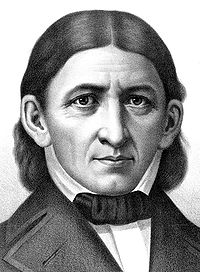
Tracing Our Roots to Germany
| Friedrich Fröbel |
Kindergarten long was considered a child’s introduction to formal learning and consisted of periods of play and social development. However, a dramatic increased emphasis on early academics has risen in the past few decades and 5 year old children do indeed have learning expectations far exceeding those of yesteryear. Research indicates that children learn more in the earliest stages of their life than at any other time and the movement to better capture a child’s massive brain growth does have warrant. But careful consideration needs to be given to how children learn and what is developmentally appropriate. You’ll be hard-pressed to find an early childhood expert or a Kindergarten teacher that would advocate for a classroom of 5 year olds sitting at desks working on worksheet after worksheet. In fact Dr. John Medina, director of the Brain Center for Applied Learning Research at Seattle Pacific University has said, "If you wanted to create an education environment that was directly opposed to what the brain was good at doing, you would probably design something like a classroom."
There are a great many benefits of a Montessori learning environment for young children and the beginning of their formal education. The individualized curriculum of a Montessori environment where children truly learn and discover at their own pace allows for children across the entire developmental spectrum to maximize their personal achievement. It is fundamentally understood and research affirmed, ‘learning-by-doing’ lays the foundation for higher learning. Dr. Adele Diamond, Canada Research Chair in Developmental Cognitive Neuroscience at the University of British Columbia found and published, “motor development and cognitive development may be much more interrelated than has been previously appreciated. Indeed, they may be fundamentally intertwined.” The learning materials in a Montessori classroom allow for children to touch, explore, and discover. This tactile learning allows for children to experience their environment which is the essence of the natural process of education. The multi-age classroom environment enhances a child’s self-confidence and self-esteem -- two qualities paramount to attempting new things later in life. Our students are encouraged to work at an individual pace and work with others who are at a similar level of academic development regardless of age. Additionally, older children are encouraged to share their knowledge with their classmates and serve as mentors or role models for the younger members of their class. Our Kindergarten students also have an extended work period in a small group environment often with a student to teacher ratio around 6:1. This intimate learning environment allows students to experience learning and encourages thinking. Our Kindergarten work period teems with creative and collaborative learning, fostering problem-solving techniques and building a foundation to achieve.
While working on this entry, I came across a great line by Dr. Amanda Moreno in the Huffington Post - "Somehow I don't think Robert Fulghum's list of essential lessons learned in kindergarten would have the same ring to it if among "share everything" and "play fair" appeared "100 sight words," "command of capitalization and punctuation," and "compose and decompose numbers 11-19." The idea that children 5 years of age are required to meet certain academic benchmarks is a bit misguided, however children this age (and younger) when properly guided can accomplish amazing results. Montessori education is a preparation for life, not a search for intellectual skills. The children have one intuitive aim in their self-development; they want to develop their inner resources and ability to cope with a strange and complex world. The child who accomplishes this, moves into harmony with this world and becomes a whole person. Montessori as an educational approach is not designed simply to teach children basic skills and information. Children need to learn to trust their own ability to think and solve problems independently. Montessori encourages students to do their own research, analyze what they found, and come to their own conclusions. The goal is to lead students to think for themselves and become actively engaged in the learning process.
Tuesday, April 17, 2012
Inspiration Courtesy of NASA
![]() |
| Space Shuttle Discovery on final approach |
![]() |
| Children running for a final glimpse |
![]() |
| Moved by the moment. |
Friday, April 13, 2012
Beyond the Walls
![]() |
| Students at National Gallery of Art |
At the end of the month, as a school community, Boyd families and staff will meet for lunch at the USA Science & Engineering Festival. The event will be a great opportunity for families to spend the day together learning, discovering and getting to know other Boyd families. The experiences gained beyond the walls of our classrooms and with teachers, parents, and friends allow for children to more readily understand our vast and interesting world. These experiences provide a hands-on, practical, and unique learning opportunity.
Next week students will have the opportunity to observe one such experience as the Space Shuttle Discovery will fly overhead one last time before landing in our backyard at Dulles International Airport en route to its final destination at the Smithsonian’s Steven F. Udvar-Hazy Center. With all of our campuses located so close to Dulles International Airport, we should have ideal vantage points during the flyover (scheduled for Tuesday, April 17) so students can spot Discovery and the Shuttle Carrier. As the Shuttle passes, we’ll be taking plenty of photos which will be incorporated into an art installation piece. The centerpiece of the art installation will be a painting done by Broadlands’ After School art students inspired by the artwork of former astronaut and fourth man to walk on the moon, Alan Bean. Commander Bean's painting, "Hopes and Dreams" (see below) was created to commemorate the historic return to space flight of Space Shuttle Discovery following the Challenger accident. For more information on the fascinating life and for examples of Alan Bean’s artwork: http://www.alanbean.com/
![]() |
| "Hopes & Dreams" - Alan Bean c. 1987 |