Wednesday, July 24, 2013

Maria Montessori's Words on Nature


Children at The Boyd School - Broadlands
 Maria Montessori, in an excerpt from the forthcoming Nature in Education, originally written in 1913:

"The importance of nature in the devleoplment of the physical and intellectual life is all the more significant to us in the method which I promote, because when a child has been prepared to observe the environment by means of the didactic material we give him, the intellect of that child is largely formed. And one of the aims and forms of education, as offered within the scope of the method which I expound, is that of guiding a child, indirectly, to know how to observe to the greatest possible degree, and then to wait for the subsequent spontaneous manifestations. Contrary to others who make use of nature in order to form the inner life of a child, we do not wish to teach the child too directly to observe nature. We leave children to observe by themselves and only try to give them the means and the capacity to observe, and when we see that they are not yet able to observe natural facts, we do not make them, although we do continue our work which should turn them into observers. When children succeed in being interested in and in observing the phenomena of nature of their own accord, then we may be certain that nature will have a great influence on children themselves."

Thursday, June 27, 2013

Learning to Empathize


Montessori students learn to be global citizens by taking a symbolic walk to better understand the daily challenges others face in different parts of the world.

On May 24, students from The Boyd School Broadlands & Westfields Campuses joined together to bring awareness to the plight of the people of the Azawak region in Africa. Working with Amman Imman: Water is Life, the students raised funds that will go directly towards the construction of wells and boreholes so that the people in Sahel area of West Africa will have access to fresh water. In partnership with local communities, global partners and school children from around the world, Amman Imman has brought four borehole wells to Niger's Azawak region already, offering more than 100,000 people and their livestock a sustained supply of clean water. 2013 marks the seventh time the families from The Boyd School have partnered with Amman Imman raising thousands of dollars towards this effort. This year alone, students and families from The Boyd School raised over $2,100.

A Walk for Water is a fundraising event that symbolizes the 35 mile trek children living in the Azawak sometimes travel to bring water home for their families. To bring a better understanding of how difficult this trip can be, The Boyd School students, parents, and teachers hiked the trails at Ellanor C. Lawrence Park in Chantilly. Although the walk was only a fraction of the distance and hardly the same harsh environment that many children in Niger’s desert must journey for water, to The Boyd School students who have been learning about Niger’s water crisis in their classes, the event symbolized their solidarity with the Nigerien children. As a token of their appreciation, the Nigerian children sent handcrafted gifts to some of The Boyd School students that have been participating in the events for numerous years.


Amman Imman: Water Is Life is a Washington, D.C.-based organization. To learn more about the organization, visit www.ammanimman.org.

The Boyd School is one of five schools in Virginia that is fully accredited by AdvancED (Southern Association of Colleges and Schools) and the American Montessori Society. For more information on Montessori education and The Boyd School visit: www.theboydschool.com

Monday, May 13, 2013

Not Seeking a Prize...But It Does Feel Good.


I am lucky. Each day I have the opportunity to observe my 22-month-old son discovering the world around him; watching how he processes new sights and sounds. I also have the joy of seeing classes of children doing the same all day long. I am witness to children learning new concepts and developing a sense of accomplishment.  Last year I wrote the following description of standing inside of a Montessori classroom and simply observing:

Anyone who has spent time around a Montessori learning environment has witnessed the shear joy that children exhibit when they discover a new concept or complete a task purely on their own. Just last week as I was taking some photographs of children during their extended work period, I heard a cry of "I did it!" As I turned to see what caused this shout of joy, a primary student was standing by himself with his arms held high, grinning from ear to ear at his accomplishment. There was no adult working with him, no gold star on his paper, just a child thrilled with his own success. Talk about a love for learning...
During the same work period, I observed a young girl carefully at work with practical life materials. As she finished her work, she neatly placed the materials back on the shelf and began her next task - cleaning the windows of the door to the playground. I watched as she sprayed the windows, put down the spray bottle and wiped every drop off of the window (and even the couple of drops that accidentally spilled onto the floor). Her attention and focus on her task were absolutely amazing. She displayed such a deep care for the appearance of her classroom, her environment.

These children were not looking to an adult for praise. They were not seeking a prize or a “good job!” They solely enjoyed learning and were filled with a drive to succeed. That said, it still does feel good to hear that your work is appreciated, respected, and recognized. On that note...

The Boyd School is honored to have been named a finalist by the readers of I AM Modern magazine as the Best of the DC Suburbs 2013 in:

  • Best Montessori
  • Best Kindergarten
  • Best Private School (K-8)


Members of the school community can show their continued support for the school by completing the online survey here

I, personally, am grateful and humbled to have been nominated by a parent for the Academy of Education Arts and Sciences International’s Bammy Awards for contributions on behalf of The Boyd School to the education community. I am greatly touched by this honor and will certainly appreciate any votes for the Bammy Awards - Educator's Voice Award (vote here). 


Mike Brown is part of The Boyd School's Support Staff. Mike has been with the school since October of 2004 and has served the school in a jack-of-all-trades capacity ranging from Art Teacher to Director of Admissions to his current role as Public Relations Coordinator.  

Monday, April 22, 2013

Flower Arranging


When you enter a Montessori classroom you are presented with an environment of order. An environment that is meticulously prepared each morning before any students arrive. The beautiful learning materials are carefully arranged showing children the progression of learning. 

Another staple of a Montessori environment are fresh flowers...beautiful fresh flowers in small glass vases. Each classroom has an area of the room designated to Practical Life where students develop these skills through various lessons. One of these lessons is on flower arranging. Everyday skills such as pouring, cutting, measuring, and estimating are all practiced with this activity but it also fosters ownership and pride in their classroom. One of the most beautiful sights is the pride in a child's eyes when he hands his teacher freshly picked flowers from the garden at home to donate to his class. 


Thursday, March 21, 2013

Making a Difference

By: James Rice

Every person; big or small, can make a difference. Like no other time in history, we are an interconnected world community. We understand the importance of life and living it in a sustainable manner. However, as a singular person it becomes daunting when trying to make a difference.

One of my favorite group lessons that I have ever observed on the incredible impact that individuals can make was perhaps one of the simplest. The students were asked to sit in a giant circle. Each student was given a piece of paper and asked to hold it in their lap. They then were asked to look at the circle and see how clean it was. One student was then asked to crumble her paper and toss it into the middle of the circle. The students observed that the single crumbled paper did not have much of an impact on the cleanliness of the circle. However, as one by one each student crumbled their paper and tossed it into the circle they quickly realized that although they individually only contributed one small crumbled paper to their circle, it quickly grew into a massive pile. This simple lesson demonstrated to the students and to me, the difference we each can make.

At The Boyd School, each March for the past 4 years, we have joined in the global movement to make an impact and symbolically unite for a cause - our planet. 


What is Earth Hour?

Earth Hour is a simple idea that quickly turned into a global phenomenon.  Hundreds of millions of people around the world turn off their lights for one hour on the same night, to focus on the one thing that unites us all - our planet.  Earth Hour is a great opportunity for schools and parents to talk to children about our planet and the importance of taking care of it. For more information, visit the World Wildlife Federation site and watch the video below:


When is Earth Hour?

Global Earth Hour will be held on Saturday, March 23rd from 8:30 - 9:30pm.  The Boyd School will host a school day Earth Hour on Friday, March 22 from 9:30 - 10:30am.  The school will turn off lights and minimize power sources to contribute to Earth Hour 2013. We encourage our families to participate in Earth Hour on Saturday evening and take the opportunity to commitment as a family to do something more for the planet that goes beyond the hour.


James Rice is the Campus Director of The Boyd School - Herndon Campus. James has been with The Boyd School since 2006 and has served as Director of Admissions and Campus Director at various Boyd locations.  He enjoys art, music, sports and giving back to the community. 


Thursday, February 21, 2013

What is Boyd Montessori?


What does it mean to have a Boyd School Montessori education? We want to know what it means to you; our students, our families, our teachers and staff. 

Here’s the challenge though, can you to tell us in 15 seconds or less


Viddy is a great video editing and sharing app that limits the length of videos to 15 seconds. Share your Boyd School-themed Viddy with us on Twitter by using the #BoydMontessori hashtag. Or simply email your 15 second video to publicrelations@theboydschool.com

As part of Montessori Education Week, we will be sharing our favorites on our social media sites. The most creative entry as voted by our Facebook followers will receive a token of appreciation from the school. 

Wednesday, January 30, 2013

The Importance of Routine


Rituals and routines provide children with security and a sense of safety. Their understanding of what comes next allows for them to prepare. Change is difficult and transitions can present challenges. By developing a routine, children know what to expect and this reduces the stress on everyone and makes for a much calmer transition.

The consistency provided by the five day a week program helps children (and parents) develop a routine and begins to help children develop a mastery of self. Throughout the course of their young lives children are presented with any number of changes that are beyond their control. Infants and toddlers are confronted with giving up breastfeeding, bottles, cribs, to name a few. They are placed in new environments surrounded by new people. All of these erode their sense of security. Predictability allows for children to develop self-discipline, to take control of their own activities and gives them the confidence to tackle new challenges. Being around the same adults and same classmates on a consistent basis helps them develop true relationships quicker and aids in their social development. Children often display signs of stress when presented with the challenge of missing a classroom event such as birthday celebration or a special lesson on a day when they were not in class. It is more difficult for children attending school on a partial week schedule to grasp concepts and often takes them longer to show academic growth.

Children from homes where belongings are not properly put away have a difficult time understanding that life can run more smoothly if things are organized a little. In a Montessori learning environment, children are exposed to neat and orderly classrooms. They learn to care for their classroom, respect their classmates, and to properly use the learning materials. The order of the Montessori classroom allows for children to focus and concentrate on their work without worry. Children learn to prepare a work space and meticulously note the materials needed to complete their task. Because each child cares for their environment and carefully stores the learning materials when their work is done, there is no worry of a missing puzzle piece or broken materials.

The importance of establishing routines or family rituals can have an even greater impact as children grow older. Something as mundane as a family game night every Thursday has the potential to provide families with a venue for family discussions in a safe environment. Even in the most difficult of times of adolescence, children can look forward to these predetermined events.


Six Benefits of Using Routines with Your Kids

By: Dr. Laura Markham

1. Routines eliminate power struggles because you aren't bossing them around.  This activity (brushing teeth, napping, turning off the TV to come to dinner) is just what we do at this time of day.  The parent stops being the bad guy, and nagging is greatly reduced.

2. Routines help kids cooperate by reducing stress and anxiety for everyone.  We all know what comes next, we get fair warning for transitions, and no one feels pushed around.

3.  Routines help kids learn to take charge of their own activities.  Over time, kids learn to brush their teeth, pack their backpacks, etc., without constant reminders.  Kids love being in charge of themselves. This feeling increases their sense of mastery and competence.  Kids who feel more independent and in charge of themselves have less need to rebel and be oppositional.

4. Kids learn the concept of "looking forward" to things they enjoy, which is an important part of making a happy accommodation with the demands of a schedule.  He may want to go to the playground now, but he can learn that we always go to the playground in the afternoon, and he can look forward to it then.

5. Regular routines help kids get on a schedule, so that they fall asleep more easily at night.

6. Schedules help parents maintain consistency in expectations. If everything is a fight, parents end up settling: more TV, skip brushing teeth for tonight, etc.  With a routine, parents are more likely to stick to healthy expectations for everyone in the family, because that's just the way we do things in our household.  The result: a family with healthy habits, where everything runs more smoothly!


Monday, November 12, 2012

Botany in the Montessori Learning Environment

Children “learn by doing” and that is a key element in the Montessori Method. 

Students learn about the different parts of a leaf. The lesson is first explained to the group by the Directress.  The next part of the lesson is for the students to “go out” into their environment and bring back what they have found into the classroom.

The use of beautiful materials within the Montessori classroom goes hand in hand with the overall learning process.   By using the “Botany Cabinet,” the child learns the shapes and names of the leaves by tracing their borders and matching them to those they actually found in their own environment.  This enables the child to actually see and touch and learn.  We refer to this as a sensorial experience.

The children absorb a limitless wealth of impressions, taking in all of the elements of the world around them.  This lays a foundation for the love of learning for years to come.

Friday, November 9, 2012

A Day Out

Brother & sister experiencing a day out.
Parents often ask how they can extend their child’s learning from school to home. There are countless ways to do so, but perhaps the most important piece of advice I can provide is for them to do something as a family. Children learn by their experiences. This concept is at the cornerstone of the Montessori Method.

The experiences gained by a day out are immeasurable. Touching, feeling, smelling the world around heightens learning and provides children with lasting memories. A trip to the zoo or a museum offers the chance for a child to not only imagine being in a far off, exotic environment, but actually experiencing a close replica. It almost becomes an adventure.

Although a wonderful family event, it far too often becomes simply that...a singular event - a day out. Imagine the possibilities and the excitement that you could generate before and after your trip with just a little effort. Not only would this give your child a better experience during the day out, but also has the potential to turn your trip into a lifetime memory.

Here are a few simple ideas to do just that:
  1. Visit the local library or download some books related to the place you’ll be visiting. Read the books together. This will create excitement for your child but also help you understand your child’s perspective on where you are going. Make sure to read a good selection of both fiction and non-fiction books, to spark your child’s creativity while giving a foundation of knowledge.
  2. Make a scavenger hunt. Print out or download to your phone images that you expect to see on your trip. If your children have seen a painting or sculpture and know a little information about the artist, a trip to an art gallery becomes magical.
  3. Create a collage. Before your trip, use old magazines or print out photos of what you expect to see. During the trip, give your child a camera. I have yet to meet a child that did not love taking photographs. After the trip, have your child use their photographs to make a collage to display in their room.
  4. Go on a letter hunt. B is for Butterfly. During the day, have your child spot items that begin with each letter of the alphabet. Take a picture, upload your photos to one of the many online print services and create your own letter book from your trip.
  5. Cook a meal inspired by your trip. I saved the best for last (at least in my opinion). Nearly everything we do can have a connection to food. Cooking with your children is wonderful, so much can be learned and the experience in and of itself is simply fun.

Wednesday, November 7, 2012

Civics - The Montessori Way

Election Day has passed. I was amazed at how many students came to school yesterday proudly wearing an “I Voted” sticker. This badge of honor indicated how many of them had the opportunity to visit a polling station and begin to understand our country’s political process. However, as a school that embraces the Montessori philosophy of education, nothing teaches like doing.

Snack Election at The Boyd School - Reston
Children at a young age begin to understand cause and effect; or in this case, sow and reap. Early Childhood students at The Boyd School - Reston Campus were given a real-life and age-appropriate civics lesson. Yesterday, they were presented with two alternatives for the snack today; homemade ice cream or Rice Krispies treats. Votes were individually and privately cast. Today, the children will be making homemade ice cream as a result.

Students in the Upper Elementary School at The Boyd School - Westfields Campus participated in the Youth Leadership Initiative at the University of Virginia Center for Politics. After independent and shared research through the use of various media, the students were given the opportunity to form their own decisions based on each candidate’s platform. The culminating Mock Election yielded additional learning moments when their results clearly showed that personal preference and outside influence do impact the results when a blind vote of each candidate’s platform was far from in-line with the actual ballots cast.

Giving children the tools to make informed decisions and helping them understand the cause and effect of their actions will benefit them greatly throughout their lifetime.

Thursday, August 16, 2012

Innovation on Display

As parents and educators, we are presented with the task of preparing our children for the future. A future that has become increasingly harder to comprehend, let alone predict. The world is changing at a pace far quicker than at any point in history. It often is said that this generation of children will be working in fields that don't even currently exist. So, how can we possibly prepare our children to succeed and thrive in a future that is beyond our understanding?

Montessori materials on exhibit at MoMA.
Photograph from Museum of Modern Art
Preparing young children for the future and truly embracing their development is a relatively recent concept. A current exhibit at the Museum of Modern Art in New York entitled,Century of the Child: Growing by Design, 1900-2000’ showcases and examines this concept. The image of the child transformed during the 20th century from that of a small adult who should be put to work as soon as possible to that of a entirely different creature filled with potential. However, as Ken Johnson wrote in his review of the exhibit for the New York Times, the fundamental question became “What do children need to flourish and become proper members of society?” Johnson further writes that the exhibit examines, “How much freedom to allow and how much control to impose are questions not only about children but also about people everywhere in a time of declining traditional values and expanding possibilities for new ways of being and doing.”

The exhibit at MoMA features Montessori materials described as follows; “From systematic analysis, [Montessori] devised an activity-based teaching method that used material objects to stimulate their senses, and she believed that children should be allowed to explore these materials at their own pace.” Her method of observing and supporting the natural development of children helps them develop creativity, problem-solving, and time-management skills. 

Julia Child's kitchen at the Nat'l Museum of American History
Photograph from Smithsonian Institute
The skills developed and nurtured in a Montessori environment help children to “think outside of the box” and to innovate. Montessori schools across the world herald the technology industry as a prime example of the pioneering skills cultivated by this learning method with former students such as; the founders of Google - Larry Page and Sergey Brin, the founder of Amazon.com - Jeff Bezos, and founder of Wikipedia, Jimmy Wales. But the pioneering spirit can be traced back before these modern creative geniuses. August 15 marked what would have been the 100th birthday of Julia Child. Child credited her love of working with her hands to her own Montessori learning experience. She encouraged people to try new things, to experiment, to discover, and yes, even to fail. If you spend any time observing in a Montessori environment, you will see each one of these. As part of the National Museum of American History’s celebration of Julia Child’s 100th birthday, her kitchen will be on display through September 3.


Learn how to cook– try new recipes, learn from your mistakes, be fearless, and above all, have a good time.”
~ Julia Child

Thursday, July 26, 2012

Understanding the Montessori Infant Environment

by Mike Brown

As I prepare to welcome home a new family member who will eventually spend time in our infant room, I have begun the process to better understand his learning environment at school. I am accustomed to walking into a classroom and seeing distinct work areas such as tables, floor mats, pillows, etc. However, a traditional work area seems hardly appropriate for a developing infant who is learning to adapt to his new environment.

After birth, the development of movement is a child’s first major skill gained. The growth from being completely immobile at birth to involuntary and later voluntary movement is typically done in a rapid progression. This is a process that we all have experienced and witnessed but far fewer of us have an understanding of why. Lacie Russell, our infant teacher explained it to me in the following manner; “Infants have an internal need to move. Their movements first start as reflexes and then become more voluntary. As they begin to explore their surroundings and become more comfortable, they learn to trust the way their bodies move and begin to explore new things. The need to move drives them so quickly, they want to see and touch everything. From learning to lift their head to crawling on all fours, they get great pleasure from movement, and this pleasure keeps them wanting more.” Christie Stanford, founder of Aid to Life Education, a company based in Vancouver, British Columbia that provides Montessori services to children between zero and twelve years old, further explains the biological development; “This happens rapidly during the first year of life as the Myelin Sheath coats the neurons in the body, which is essential in the proper functioning of the nervous system. This Myelination moves from the head to the feet and from the center of the body to the fingertips. Due to this process, the first part of the infant’s body to be Myelinated is the throat and neck, then shoulders, arms, legs, etc. until lastly the child has control of his or her wrists and fingers (refined grasp), along with ankles and toes (child can now walk).” *

This brings me back to the infant environment. Infants require a safe, comforting area for movement. This movement area offers an assortment of materials; pillows of various shapes and objects of multiple textures and sizes. Objects such as mobiles are also suspended above the mat. The point of reference provided by the mat inherently offers reassurance and security to the child. The freedom to explore not only gives him the opportunity to develop muscles required for voluntary movement but also confidence and a sense of independence.
Much the same as in an early childhood classroom, the infant’s mat or work area is carefully prepared by his caregiver. For the youngest child, he is given both tummy time and the chance for sensorial development on his back. Mrs. Russell explains in her infant environment, children are placed on their backs to give them freedom to truly move as they wish. Some infant programs use bouncy chairs or other commercial movement devices, however, when a child is placed in one of these devices his freedom is taken away and his movement is restricted. Additionally, he may not want to be placed in the position forced by the confines of one of these devices. Once a child is ready to sit up, only one material is given for exploration at a time. When the child becomes increasingly more mobile, materials are placed on a low shelf. This encourages the child to move on his own to not only get the material, but also make a decision as to which material interests him. By allowing him these freedoms, Ms. Stanford concludes, “we offer him the greatest opportunity for natural growth in an unrestricted environment.” *

Mike Brown is part of The Boyd School's Support Staff. Mike has been with the school since October of 2004 and has served the school in a jack-of-all-trades capacity ranging from Art Teacher to Director of Admissions to his current role as Public Relations Coordinator.


* Excerpts from MariaMontessori.com, “The Montessori Movement Mat - The Child’s First Working Table,” by Christie Stanford, January 2012

Wednesday, June 27, 2012

Creative Play in a Montessori Environment

Experts acknowledge that the loss of creative play has negative consequences. Imagination and creativity; cornerstones of higher math and science are developed through creative play. David Elkind, author of The Power of Play, writes "Creativity and imagination are like muscles; if you don't use them, you lose them,"

Aldie Kindergarten student's collaborative extension.
It is a common misconception that the Montessori method of learning limits creative play. This is far from actuality. In the Montessori learning environment children are often presented with materials that lay the foundation to traditional areas of education, such as the basic understanding of area and volume learned by working with the brown stair materials. However, once a child begins to grasp the geometry of these objects, an extension of this exercise allows for children to explore the possibilities of construction limited only by their imagination but grounded in a far better understanding of plane geometry. Perhaps a simpler explanation would be a comparison of two approaches to music education. Would you consider it the best method for a person to develop musical skills or to understand musical composition by simply providing a person with a set of bells without guidance or would an introduction to the chromatic scale to develop a sense of tone before doing so lead to a better learning experience and honestly, more fun? When children have a basic understanding of skills or concepts it allows for a heightened learning experience and improves a child’s confidence while playing.
Herndon students using loose parts for outdoor building.
Children have a natural and intrinsic desire to play, explore, adapt and cooperate, especially in the outdoors. The benefits of outdoor play are easily identified and the development of large-motor skills and social interactions are well documented. Although traditional playground equipment such as slides, climbers, balls, etc. provide children a great deal of benefit and avenues for development, true creative activity is somewhat limited. Providing children with materials and equipment (loose parts) that can stimulate, facilitate and enhance children’s play leads to a high level of ownership which is a powerful ingredient in providing a positive play and learning experience for a child. Jeff Hill of the Childrens Scrapstore, a UK business providing children with these loose parts for playground use since 1982 states, “Giving children the opportunity to experience higher levels of creative activity during playtime, makes a difference to them, to their relationships with others and ultimately to the whole school environment.”

Westfields children on board the train climber.
At The Boyd School, we have enhanced our children’s outdoor experience through a number of playground extensions. Through the use of loose parts, children have the opportunity to construct on a larger scale than within the walls of the classroom using similar materials. Currently, children can build with custom designed, lightweight outdoor building blocks and small tires. The buildings, towers, and vehicles are only limited by their imagination. Additional and various loose parts are introduced to constantly provide children new materials in which to play. Children at the Aldie Campus have the opportunity to manipulate their playground experience through the use of a Snug Play system. The Snug Play system, generously donated by Van Metre to the school, is a series of lightweight, open-ended and moveable collection of play equipment. Children have the opportunity to create entirely new play environments and experiences through collaboration and the use of their imaginations. The Snug Play system at The Boyd School is one of the first installations in Virginia. Children at the Broadlands Campus have the opportunity to manipulate and build with natural materials creating paths, walls, and tunnels. The Boyd School - Westfields Campus offers children the opportunity to ‘travel’ as far as their imaginations allow on board an Amish built train climber.

Thursday, June 21, 2012

The Amazing Teacher

It takes an uniquely talented individual to be a teacher. They truly are the life-force of any institute of learning. We all are aware that these amazing people are tasked with educating the future, the proverbial next generation. We also understand they are responsible for developing in children social skills necessary for each child to become productive members of society.

Maria Montessori said of teachers, “The greatest sign of success for a teacher... is to be able to say, ‘The children are now working as if I did not exist.’” Her statement requires some additional thought to fully comprehend the inherent meanings.

It is the teacher’s responsibility to create an environment in which each of her students feel comfortable and at ease. To create an environment conducive to discovering, to exploring, to learning. Each child needs to be guided towards independence and instilled with the confidence to learn on their own. Meaning, children have to be both willing to succeed and conversely willing to undergo failure and to use a set-back as a learning tool. Keen observation and interaction is required by teachers to understand the needs of each child in order for this concept to come to fruition.

In a classroom inspired by the research and educational philosophy of Montessori, children stay with the same teacher for three years. This developmental journey results in a tremendous bond between child and teacher not to mention teacher and family. Recently, we had the opportunity to enjoy the wide arrange of emotions as children cross or move up to the next level in our Montessori learning environments. From the shear joy and pride teachers feel as a child completes this stage of development to the heartfelt tears as they say goodbye, these incredible people we call teachers truly understand Montessori’s statement.

At The Boyd School we take great pride in our teachers and staff. We appreciate the tremendous effort and love that they share. Each year a few of our beloved Boyd family leave us as they pursue other personal or professional endeavors. We extend to each of these wonderful individuals sincere wishes for success and take it with great pride to know that so many members of the Montessori community truly learned the craft of teaching under our tutelage.

We are constantly looking for uniquely gifted individuals to become a part of our community. Being passionate, creative, joyful are required qualifications. If you are interested in becoming a part of the Boyd family and the extended Montessori community contact us (Email The Boyd School). CLICK HERE for current career openings.

Wednesday, June 6, 2012

Interactive School Tours

The Boyd School - Aldie Campus is the first school in the Washington DC Metro area and one of the first in the nation to participate in a new Google Photography program that allows people to take a virtual tour of the school and ‘walk through’ the classroom learning environments. This interactive tool will assist parents to better understand the progression of learning and the inclined spiral plane of integrated studies that are at the foundation of the Boyd School’s curriculum.

The stunning 360-degree, interactive tour of the school was created through Google’s Street View technology and captured by the artful eye of local Google Trusted Photographer, Will Marlow. Using sophisticated image stitching, HDR, image matching and other technologies, Mr. Marlow created the panoramic walkthroughs of The Boyd School - Aldie Campus.


View Larger Map
Click to navigate.

The Montessori method of education used at the Boyd School is a child-centered, hands-on approach to learning that uses research derived, multi-sensory materials carefully organized in a prepared learning environment. Explaining the proper use and purpose of these materials allows for parents to better understand their child’s academic growth and achievement. Through the use of the interactive, virtual classroom tour, teachers and administrators will be better equipped to share this information. Prospective parents also have the opportunity to explore the school’s learning environment to aid them when considering schooling options for their child.

Tuesday, May 22, 2012

A Walk For Water

Students from The Boyd School are part of a rich, diverse community. We embrace the many heritages of our families and celebrate their cultures. As an extension of that community, children and families participate in events and outreach programs throughout the year that help us understand that we are all global citizens.

This Friday, our Elementary and Middle School students will take a symbolic journey of 3 miles through the paths of Ellanor Lawrence Park. A Walk for Water is a fundraising event that symbolizes the 35 mile trek children living in the Azawak sometimes travel to bring water home for their families. Our younger students participate through what is called, Amman-a-Thon. The Amman-a-thon is a fundraising event that unites fitness and philanthropy. Students gain athletic proficiency while raising awareness and funds to support sustainable sources of water in the Azawak Valley.

A vast plain approximately the size of Florida on the edge of the Sahara, the Azawak is one of the poorest regions in landlocked countries, Niger and Mali.  Climate change has shortened the rainy season to less than two months a year. The local outreach organization, Amman Imman works with schools and other groups throughout the world in an effort to bring awareness and support for the people of this region. The Boyd School families along with contributions from other Montessori schools have provided Amman Imman the resources to have successfully drilled borehole wells that provide water for up to 25,000 people and animals, and serve as a catalyst for community development.

For more information or to donate: CLICK HERE

Video from The Boyd School 2011 - A Walk For Water

Failure as a Learning Tool

Photo via (cc) Flickr user nicolasnova
'Failure is not an option' has become a mantra of sorts for parents as they push their children to reach their potential. However, new research in the American Psychological Association's Journal of Experimental Psychology: General concludes children might perform better in school if teachers and parents sent the message that failing is a normal part of learning.

"Acknowledging that difficulty is a crucial part of learning could stop a vicious circle in which difficulty creates feelings of incompetence that in turn disrupts learning," says Frederique Autin, one of the authors of the study. The findings challenge the cultural belief that achievement reflects students' academic ability. If we truly want students to excel, Autin says, teachers and parents must stop "focusing solely on grades and test scores" and emphasize progress instead.

The learning environment of a Montessori classroom and selected activities are prepared to interest and motivate the child and to protect him from unnecessary failure. Dr. Montessori said, "Never let a child risk failure until he has a reasonable chance of success." The Montessori materials develop basic problem solving and observational techniques. The child begins in the concrete with manipulative materials and gradually works toward the abstract. This provides children with the necessary tools to problem solve and actually think.

Will Wright, a former Montessori student and the developer of the computer simulation city building game SimCity was featured the New Yorker discussing the influence his early education had on his life.
Will Wright (Portrait by Julian Dufort)


"Wright flourished in the local Montessori school, with its emphasis on creativity, problem-solving, and self-motivation. ‘Montessori taught me the joy of discovery... It showed you can become interested in pretty complex theories, like Pythagorean theory, say, by playing with blocks. It’s all about learning on your terms, rather than a teacher explaining stuff to you. SimCity comes right out of Montessori—if you give people this model for building cities, they will abstract from it principles of urban design.’"

Wright then compares his experience in Montessori to traditional education: "The problem with our education system is we’ve taken this kind of narrow, reductionist, Aristotelian approach to what learning is.... It’s not designed for experimenting with complex systems and navigating your way through them in an intuitive way, which is what games teach. It’s not really designed for failure, which is also something games teach. I mean, I think that failure is a better teacher than success. Trial and error, reverse-engineering stuff in your mind—all the ways that kids interact with games—that’s the kind of thinking schools should be teaching. And I would argue that as the world becomes more complex, and as outcomes become less about success or failure, games are better at preparing you. The education system is going to realize this sooner or later."

SimCity game has arguably become the single most influential work of urban-design theory based on the shear volume of players that have become architects and designers.

As Maria Montessori expressed, to teach the child to say: “I am not perfect; I am not omnipotent; but this much I can do and know that I can make mistakes and correct myself, thus finding my way.”

Tuesday, April 24, 2012

Tracing Our Roots to Germany

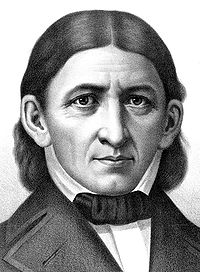
Friedrich Fröbel
As I was working on the school’s Facebook Timeline, I quickly came to realize that the creation of The Boyd School began long before the actual founding of The Boyd School in 1994. As a fully accredited Montessori school, one would think perhaps the natural start of our timeline would begin in 1907 with the opening of Dr. Maria Montessori’s first Casa dei Bambini (Children's House) in Rome, Italy or maybe with her birth in 1870. But rather, I trace our roots back to Friedrich Fröbel in 1837. This was the year that Fröbel created a play and activity institute as a social experience for children for their transition from home to school. His goal was that children should be taken care of and nourished in "children's gardens" like plants in a garden. Fröbel’s Kindergarten was the birth of early childhood education.

Kindergarten long was considered a child’s introduction to formal learning and consisted of periods of play and social development. However, a dramatic increased emphasis on early academics has risen in the past few decades and 5 year old children do indeed have learning expectations far exceeding those of yesteryear. Research indicates that children learn more in the earliest stages of their life than at any other time and the movement to better capture a child’s massive brain growth does have warrant. But careful consideration needs to be given to how children learn and what is developmentally appropriate. You’ll be hard-pressed to find an early childhood expert or a Kindergarten teacher that would advocate for a classroom of 5 year olds sitting at desks working on worksheet after worksheet. In fact Dr. John Medina, director of the Brain Center for Applied Learning Research at Seattle Pacific University has said, "If you wanted to create an education environment that was directly opposed to what the brain was good at doing, you would probably design something like a classroom."

There are a great many benefits of a Montessori learning environment for young children and the beginning of their formal education. The individualized curriculum of a Montessori environment where children truly learn and discover at their own pace allows for children across the entire developmental spectrum to maximize their personal achievement. It is fundamentally understood and research affirmed, ‘learning-by-doing’ lays the foundation for higher learning. Dr. Adele Diamond, Canada Research Chair in Developmental Cognitive Neuroscience at the University of British Columbia found and published, “motor development and cognitive development may be much more interrelated than has been previously appreciated. Indeed, they may be fundamentally intertwined.” The learning materials in a Montessori classroom allow for children to touch, explore, and discover. This tactile learning allows for children to experience their environment which is the essence of the natural process of education. The multi-age classroom environment enhances a child’s self-confidence and self-esteem -- two qualities paramount to attempting new things later in life. Our students are encouraged to work at an individual pace and work with others who are at a similar level of academic development regardless of age. Additionally, older children are encouraged to share their knowledge with their classmates and serve as mentors or role models for the younger members of their class. Our Kindergarten students also have an extended work period in a small group environment often with a student to teacher ratio around 6:1.  This intimate learning environment allows students to experience learning and encourages thinking. Our Kindergarten work period teems with creative and collaborative learning, fostering problem-solving techniques and building a foundation to achieve.

While working on this entry, I came across a great line by Dr. Amanda Moreno in the Huffington Post - "Somehow I don't think Robert Fulghum's list of essential lessons learned in kindergarten would have the same ring to it if among "share everything" and "play fair" appeared "100 sight words," "command of capitalization and punctuation," and "compose and decompose numbers 11-19." The idea that children 5 years of age are required to meet certain academic benchmarks is a bit misguided, however children this age (and younger) when properly guided can accomplish amazing results. Montessori education is a preparation for life, not a search for intellectual skills. The children have one intuitive aim in their self-development; they want to develop their inner resources and ability to cope with a strange and complex world. The child who accomplishes this, moves into harmony with this world and becomes a whole person. Montessori as an educational approach is not designed simply to teach children basic skills and information. Children need to learn to trust their own ability to think and solve problems independently. Montessori encourages students to do their own research, analyze what they found, and come to their own conclusions. The goal is to lead students to think for themselves and become actively engaged in the learning process.


Tuesday, April 17, 2012

Inspiration Courtesy of NASA

Space Shuttle Discovery on final approach
I just returned from watching Space Shuttle Discovery fly overhead on her final flight from Kennedy Space Center to Dulles International Airport. I had the privilege of viewing the historic flyover with students from our Westfields Campus. I’m sure that I could have captured better photos from other places in the area, but then I would not have been witness to what this event truly encapsulated. Words fail to do justice to the shear excitement and joy that spread across each student’s face as Discovery and the Space Carrier made their first fly by. I watched as children and teachers alike started cheering. They ran to our playground’s fence hoping to get a final glimpse of the behemoth jet and her precious cargo. Simply put, there was an energy in the air. Every person, parent, child, and teacher had a smile on their face. Parents hugged their children, teachers hugged each other. I watched children giddy with happiness sharing their photos with each other and their teachers. Pure magic.
Children running for a final glimpse

Moved by the moment.
Discovery made two more majestic flyovers before landing at Dulles, each leaving me with goosebumps and filled with awe. Now several hours after the event I am still moved by the inspiration that the flyover provided to us all. The test of time will provide us the truth, but my best guess is that today’s historic experience has inspired more than one of our students to aspire to become an astronaut.

Friday, April 13, 2012

Beyond the Walls

Students at National Gallery of Art
With school locations in Northern Virginia and in such close proximity to our nation’s Capital, our students have the opportunity for some amazing experiences. Our Kindergarten students as well as our Elementary and Middle School frequently take trips to see world class performances at the Kennedy Center for the Performing Arts. Our students have toured the White House, Library of Congress, National Gallery of Art, Phillips Collection, and National Building Museum to name but a few recent trips. Our students don’t only travel into D.C. but also take advantage of the beautiful parks and nature centers right down the road from our campuses.

At the end of the month, as a school community, Boyd families and staff will meet for lunch at the USA Science & Engineering Festival. The event will be a great opportunity for families to spend the day together learning, discovering and getting to know other Boyd families. The experiences gained beyond the walls of our classrooms and with teachers, parents, and friends allow for children to more readily understand our vast and interesting world. These experiences provide a hands-on, practical, and unique learning opportunity.

Next week students will have the opportunity to observe one such experience as the Space Shuttle Discovery will fly overhead one last time before landing in our backyard at Dulles International Airport en route to its final destination at the Smithsonian’s Steven F. Udvar-Hazy Center. With all of our campuses located so close to Dulles International Airport, we should have ideal vantage points during the flyover (scheduled for Tuesday, April 17) so students can spot Discovery and the Shuttle Carrier.

As the Shuttle passes, we’ll be taking plenty of photos which will be incorporated into an art installation piece. The centerpiece of the art installation will be a painting done by Broadlands’ After School art students inspired by the artwork of former astronaut and fourth man to walk on the moon, Alan Bean. Commander Bean's painting, "Hopes and Dreams" (see below) was created to commemorate the historic return to space flight of Space Shuttle Discovery following the Challenger accident.  For more information on the fascinating life and for examples of Alan Bean’s artwork: http://www.alanbean.com/

"Hopes & Dreams" - Alan Bean c. 1987
The Smithsonian's National Air and Space Museum is planning a festival of activities -- Welcome Discovery -- to celebrate the acquisition of the Space Shuttle Discovery.  The festival will begin when the orbiter arrives in the D.C. area on April 17 and will feature four days of space-related activities, performances, appearances by space pioneers, films, and displays at the shuttle's new home, in Chantilly, Va. Activities at the Center will kick off on April 19 when Discovery will be officially transferred by NASA into the Smithsonian's collection in an outdoor ceremony open to the public. For full list of activities - http://www.nasm.si.edu/collections/discovery/schedule.cfm